
As Customer Experience (CX) becomes an increasingly important factor in business success, delivering fast and efficient customer service is a priority for organizations across industries.
True Touch, a leading provider of comprehensive Customer Service Solutions certified to international standards, including ISO 18295-1, ISO 9001, and ISO 27001, explores how traditional customer service systems are evolving into intelligent, AI-powered solutions that enhance operational efficiency and transform customer interactions.
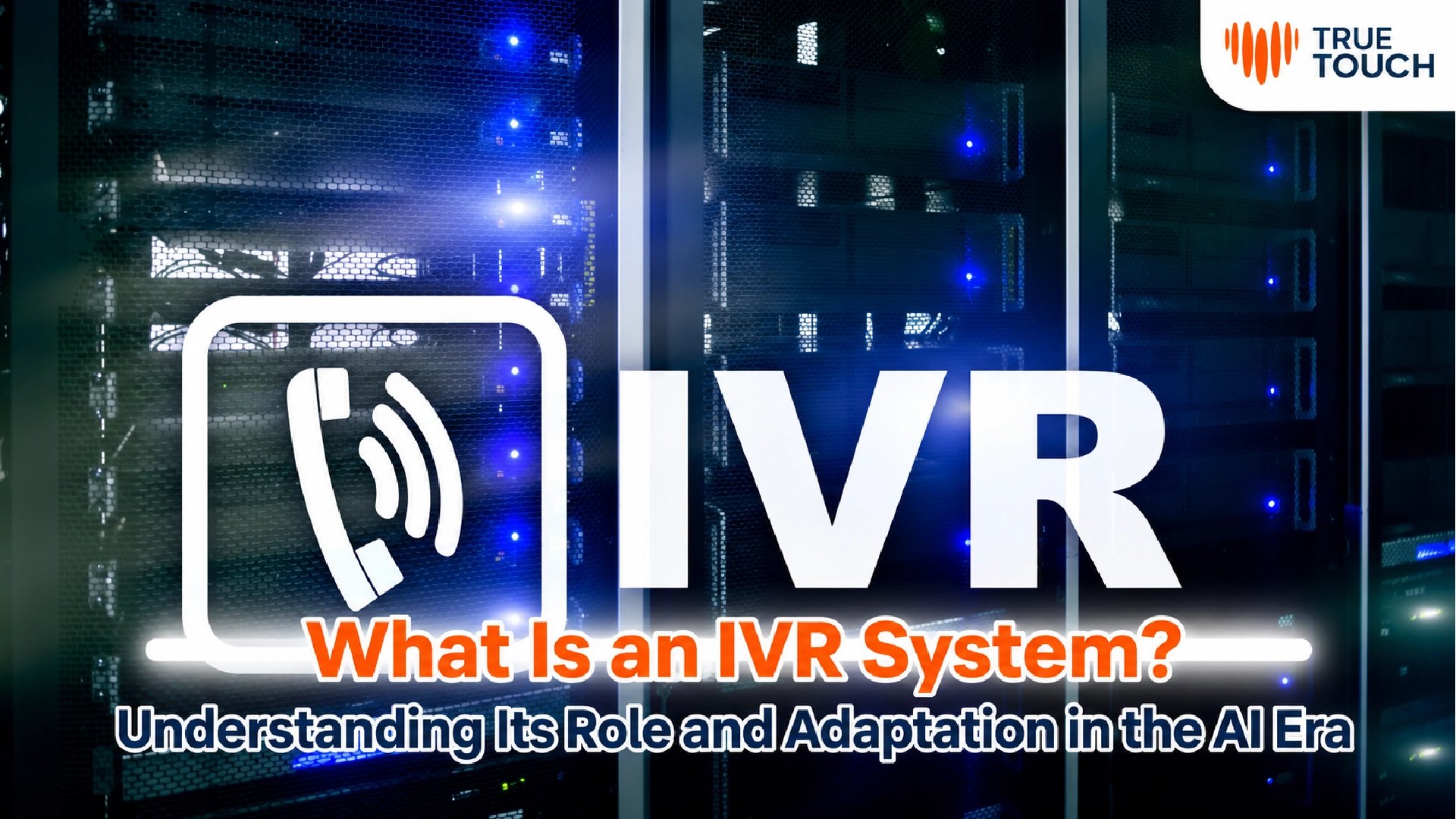
An Interactive Voice Response (IVR) system is an automated telephone technology designed to manage incoming calls within a customer service or contact center environment.
The system uses prerecorded messages or synthesized speech to interact with callers, allowing them to select service options through telephone keypad inputs or basic voice commands.
By automatically identifying customer needs and directing callers to the appropriate information or service, an IVR system helps streamline call handling, resolve routine inquiries, and efficiently transfer more complex requests to qualified customer service agents.
An IVR system operates by integrating telephony infrastructure with computer databases and business applications, enabling automated processing of customer requests.
The typical IVR workflow consists of four key stages:
This automated process helps organizations improve call-handling efficiency while providing customers with faster access to the services they need.
Advancements in artificial intelligence have transformed IVR technology from traditional keypad-based navigation into more intelligent, conversational customer service experiences.
Key differences between traditional IVR and AI-powered IVR systems include:
These capabilities enable businesses to deliver more intuitive customer interactions while reducing the complexity associated with traditional IVR navigation.

An IVR Call Center uses automated voice response technology to manage customer interactions through telephone channels. It helps identify customer needs, provide self-service options, and route calls to the most appropriate agents.
Although IVR systems and chatbots both support customer service automation, they differ primarily in their communication channels and interaction methods.
Both technologies can complement each other within an integrated Omnichannel Customer Service strategy, allowing organizations to deliver consistent experiences across multiple touchpoints.
Implementing an effective IVR system can significantly improve customer experience management and operational performance.
By combining automation with efficient call routing, organizations can strengthen service consistency while allowing human agents to focus on more complex and value-added customer interactions.
Traditional IVR systems can create frustrating customer experiences, particularly when callers must navigate lengthy or complicated menus.
Modern AI technologies help organizations overcome these limitations through more intelligent and customer-centric solutions.
These enhancements help transform traditional IVR systems into more responsive and personalized customer service solutions.

IVR systems can be customized to support different business processes and industry-specific service requirements.
Common applications include:
By tailoring IVR workflows to specific business requirements, organizations can improve service accessibility, streamline routine operations, and enhance customer convenience.
Organizations already operating traditional IVR systems can implement a structured transformation roadmap to modernize their voice-based customer service capabilities.
Three key steps include:
A well-planned transformation strategy enables businesses to modernize customer service operations while maintaining service continuity and delivering a more consistent customer experience.
True Touch is ready to help your organization modernize customer service operations through intelligent IVR systems and AI-powered Customer Service Solutions.
By combining experienced professionals, advanced technologies, and service operations aligned with ISO 18295-1 international standards, True Touch helps businesses improve operational efficiency and deliver customer experiences that exceed expectations.
Our commitment is to care for your customers with the same dedication and attention we would give to our own.
Contact True Touch to learn more about our solutions:
Tel: +66 (0)2 088 8999
Email: [email protected]
Website: https://www.truetouch.co.th/en
An Interactive Voice Response (IVR) system is an automated telephone solution that manages incoming calls, answers routine inquiries, and directs customers to the appropriate service agents. It helps improve call-handling efficiency and reduce customer waiting times.
Traditional IVR systems require callers to navigate predefined menus using telephone keypad inputs. AI-powered IVR systems use Natural Language Processing (NLP) to understand spoken requests, allowing customers to communicate their needs naturally without navigating complicated menus.
IVR systems automate repetitive customer service tasks and provide 24/7 assistance for routine inquiries. By reducing the volume of calls requiring live-agent intervention, businesses can optimize workforce allocation, improve operational efficiency, and manage customer service costs more effectively.
Yes. IVR systems can integrate with CRM databases to retrieve relevant customer information and display interaction histories when calls are transferred to live agents. This integration helps agents provide more personalized, efficient, and consistent customer service.
Businesses should begin by analyzing historical call data to identify frequently requested services and common customer pain points. They can then introduce AI Voicebot technology and integrate it with existing CRM and business systems to improve automated responses, streamline workflows, and enhance the overall customer experience.