
Modern contact centers must continuously evolve to meet rising customer expectations. True Touch, a leading provider of comprehensive Customer Service Solutions, certified to international standards including ISO 18295-1, ISO 9001, and ISO 27001, and committed to compliance with Thailand's Personal Data Protection Act (PDPA), explores the power of Predictive Analytics.
By leveraging predictive data analysis, organizations can anticipate potential customer service issues, identify emerging trends, and take proactive measures to resolve problems before they escalate, ultimately improving operational efficiency and Customer Experience (CX).
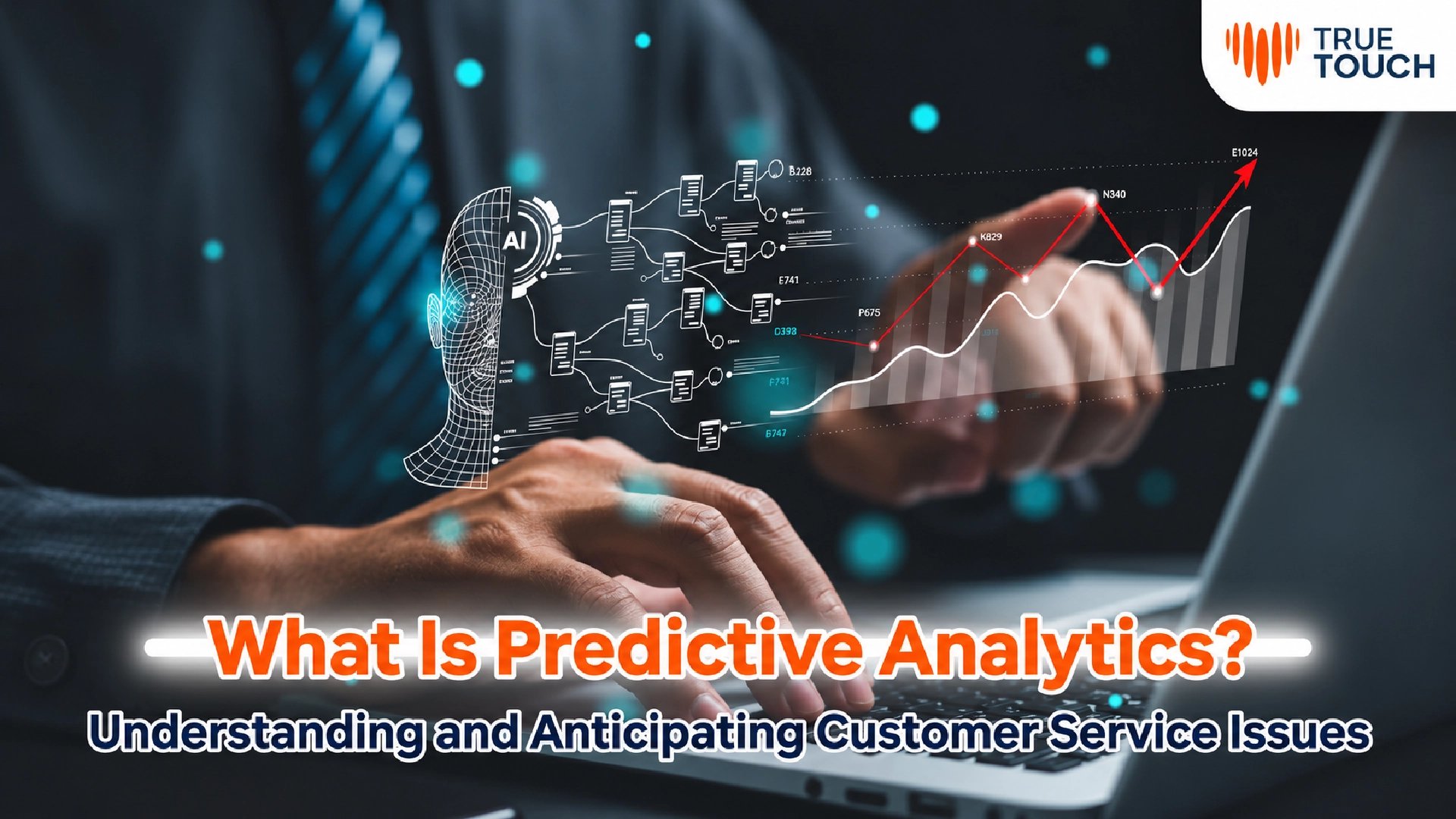
Predictive Analytics is an advanced data analysis approach that combines historical and real-time data with statistical models and Machine Learning technologies to forecast future trends, customer behaviors, and potential business outcomes.
By identifying patterns and relationships within large datasets, Predictive Analytics enables organizations to anticipate potential risks, recognize emerging opportunities, and make informed decisions before issues arise.
In customer service operations, this capability helps businesses shift from reactive problem-solving to proactive customer engagement, resulting in more personalized and efficient service delivery.
Prescriptive Analytics is an advanced analytical approach that builds upon predictive insights by recommending the most appropriate actions to achieve desired business outcomes.
Rather than simply forecasting what might happen, Prescriptive Analytics evaluates possible scenarios, analyzes alternative courses of action, and estimates their potential outcomes.
This enables organizations to identify effective strategies, optimize decision-making processes, and select suitable solutions for addressing customer service challenges.
By combining predictive insights with actionable recommendations, businesses can move beyond anticipating problems toward implementing data-driven solutions.

Although Predictive Analytics and Prescriptive Analytics both focus on future-oriented decision-making, they serve different purposes and provide distinct levels of analytical insight.
Predictive Analytics answers the question, "What is likely to happen next?"
It uses statistical models and Machine Learning algorithms to estimate the probability of future events.
For example, a business may use Predictive Analytics to forecast customer churn rates and identify customers who are likely to discontinue their services.
These insights allow customer service teams to recognize potential risks and prepare appropriate preventive measures.
Prescriptive Analytics answers the question, "What should we do next?"
It goes beyond forecasting by evaluating potential scenarios and recommending suitable actions or solutions.
For example, when a system identifies a customer at risk of leaving, Prescriptive Analytics can recommend personalized retention offers or specific service interventions that employees can implement.
This helps organizations turn analytical insights into practical strategies and more effective business decisions.
Implementing Predictive Analytics in contact center operations enables organizations to gain deeper insights into customer behavior, anticipate customer needs, and deliver more proactive service experiences.
Key applications include:

Integrating Predictive Analytics into customer service operations provides significant opportunities to strengthen business competitiveness, improve operational performance, and enhance brand reputation.
Key benefits include:
With predictive insights, businesses can transform customer service from a reactive support function into a proactive driver of customer satisfaction and long-term business value.

Successful Predictive Analytics implementation requires organizations to establish the right data infrastructure, maintain reliable analytical models, and integrate insights into daily operations.
Key challenges and recommended approaches include:
Addressing these challenges enables businesses to maximize the value of Predictive Analytics while maintaining customer trust, data security, and operational reliability.
Every customer conversation contains valuable signals about customer needs, expectations, and potential dissatisfaction.
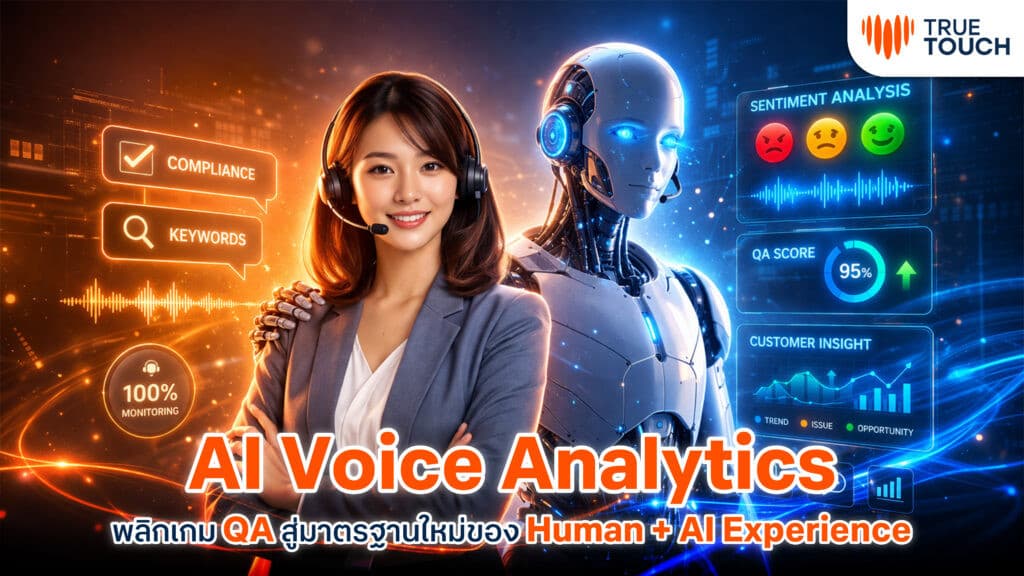
Speech Analytics technology from True Touch helps transform customer voice interactions into actionable business insights by analyzing conversations, identifying relevant keywords, and detecting potential signs of customer frustration or dissatisfaction in real time.
These capabilities enable organizations to gain a deeper understanding of customer behavior and support Customer Churn Analysis, helping identify customers who may be at risk of switching to competitors.
With timely insights, businesses can take proactive measures to address customer concerns, improve service recovery, and strengthen customer relationships before customers decide to discontinue their services.
True Touch is ready to help your organization transform contact center operations through intelligent Speech Analytics Solutions.
With more than 20 years of experience in Customer Operations, supported by internationally recognized standards including ISO 18295-1 and ISO 27001, True Touch combines industry expertise, proven operational processes, and advanced technologies to help businesses turn customer conversations into valuable retention strategies.
Our commitment is to transform every customer interaction into an opportunity to strengthen loyalty, improve service performance, and deliver exceptional Customer Experience.
We care for your customers as if they were our own.
Contact True Touch to learn more about our Speech Analytics and Customer Service Solutions:
Tel: +66 (0)2 088 8999
Email: [email protected]
Website: https://www.truetouch.co.th/en
Predictive Analytics uses historical data, statistical models, and Machine Learning to forecast future customer behaviors and potential service issues, such as customer churn risk. It enables contact centers to identify warning signs early and take proactive actions to improve Customer Experience before problems escalate.
Predictive Analytics focuses on forecasting "What is likely to happen?" by analyzing historical patterns and estimating future outcomes.
Prescriptive Analytics goes a step further by answering "What should we do next?", recommending appropriate actions or solutions to help employees and organizations make more effective decisions.
Yes. Organizations can begin by collecting and analyzing key customer behavior data over an initial period of approximately 6–12 months, such as call histories, transaction records, or purchasing patterns.
They can then develop predictive models for specific customer segments or use cases and gradually improve model accuracy as additional data becomes available.
Yes. Predictive Analytics can help businesses identify early warning signs of customer churn, such as changes in customer engagement or contact behavior.
These insights enable organizations to proactively offer personalized assistance, targeted promotions, or service improvements, increasing opportunities to retain customers before they decide to leave.
Organizations should implement strict data access controls, appropriate encryption measures, and secure data management practices.
They should also select technology providers that follow internationally recognized information security standards, such as ISO 27001, while ensuring compliance with applicable data protection regulations, including Thailand's Personal Data Protection Act (PDPA).